A deep blue field with the state coat of arms: pine tree, cow, sheaves of wheat, and Green Mountains. A stag’s head crowns the shield, while a banner below proclaims “Freedom and Unity.” A rustic, pastoral vision of the state.
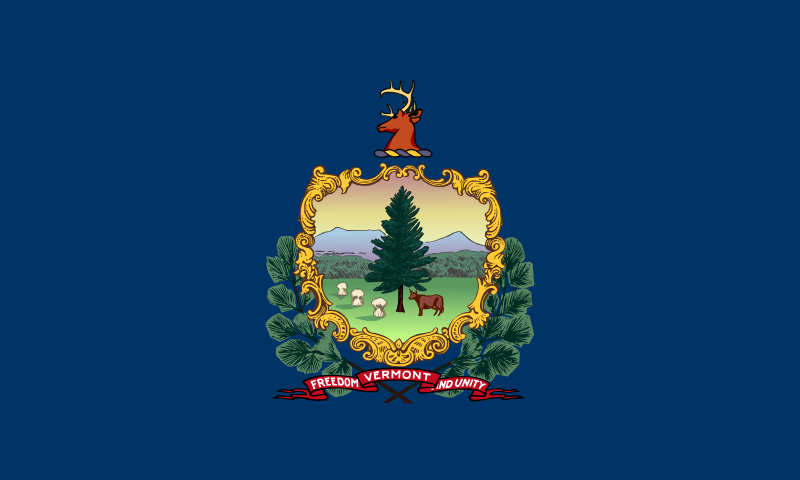
Blue field with Vermont coat of arms centered.
Ratio: 3:5
Flag at a Glance
- Designer
- Legislative adoption
- Ratio
- 3:5
- Text on flag
- Yes
- Animals
- Cow
- Design type
- State seal on blue field
- Complexity
- 8/10
- Readability
- 4/10
- Seal-based design
- Yes
Colors used
Flag Symbolism
Pine Tree
Represents forests and independence.
Cow And Sheaves
Symbolize agriculture and farming tradition.
Green Mountains
Stand for the state’s natural landscape.
What Makes This Flag Unique
A lot of state flags share common themes. This one stands out for a few reasons:
- Features a cow as a primary agricultural symbol
- Uses an English-language motto emphasizing balance
- Closely associated with an earlier revolutionary banner
Praised and Criticised
Common praise
- Strong pastoral symbolism
- Clear connection to landscape and agriculture
- Distinct state identity within New England
Common criticism
- Highly detailed seal
- Includes text
- Low visibility at distance
- Similar to many seal-on-blue flags
Modern Discussion
Redesign debate: Yes
Common suggestions
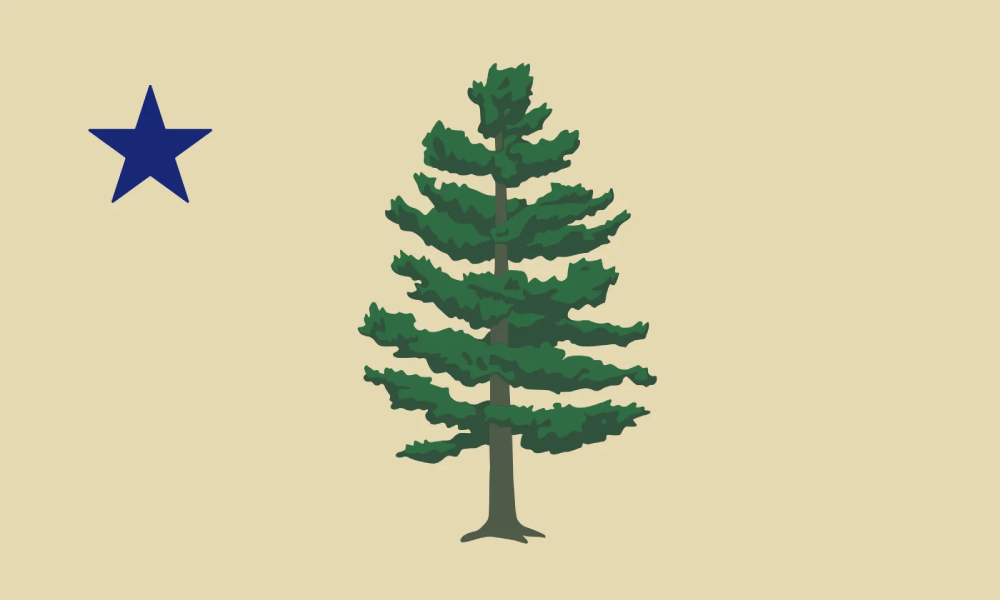
- Revive the historic Green Mountain Boys flag
- Remove the state seal
- Eliminate text and simplify the design
Notable proposals
- Green Mountain Boys flag revival concepts
For Teachers & Students
Classroom-ready prompts, printables, and citation info for studying the Vermont state flag.
Subjects
Learning objectives
- Identify natural resources shown on the coat of arms.
- Explain Vermont’s role as an early independent republic.
Print this
Printable classroom handouts for this flag page.
Cite this page
Copy and paste a ready-made citation.
MLA
APA
Note: Citation formats can vary by school. These are common classroom defaults.
Seal Deep Dive
State Seal
The Vermont state seal centered on a blue field.
Attributes: Green mountains, Pine tree, Cow, Sheaves of wheat, State name and motto
Meaning: Vermont’s natural landscape, agriculture, and independence
Pine Tree
A tall pine tree standing prominently in the foreground.
Attributes: Evergreen pine
Meaning: Resilience, independence, and Vermont’s forested environment
Cow
A cow standing beneath the tree.
Attributes: Grazing cow
Meaning: Dairy farming and rural prosperity
Motto
The state motto 'Freedom and Unity' displayed below the seal.
Attributes: English text
Meaning: Balance between individual liberty and collective responsibility
Historical Timeline
Vermont admitted as the 14th state.
Current design adopted.
Fascinating Facts
Vermont was an independent republic before joining the U.S.
The only state capital with a population under 10,000 (Montpelier).
The state coat of arms is the central feature of the flag.
A pine tree symbolizes Vermont’s forests.
A cow represents agriculture and dairy farming.
Sheaves of wheat symbolize prosperity and farming.
A deer’s head appears above the shield as a crest.
The motto 'Freedom and Unity' reflects balanced state values.
State Information
- Population
- 643,077
- Area
- 9,616
- Founded
- Mar 4, 1791